The messiah is a spiritual force. It is the Light that penetrates self-aimed human desires to correct them so that they become altruistic, that is to say, identical to those of the Creator. In our world all spiritual forces are manifested in material garments.
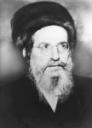
For example Rabbi Shimon, the Ari and Yehuda Ashlag (Baal HaSulam) represent a spiritual force radiating the Light of correction. This force appears in our world as a man, a Kabbalist, a professor, a book author. Therefore, the Messiah is a guide who becomes progressively accepted by humanity. Humanity will follow the path pointed by the Messiah because evil and suffering will be felt by all, and there will be no other way out. People stand on a level where they cannot imagine the coming of the Messiah as a Light but only as a human leader. But for Kabbalists, the Messiah is the spiritual force of correction (in the image of the world of AB SAG).
What you do affects the whole, and vice versa. A Kabbalah story from Rabbi Shimon Bar Yochai perfectly brings home the point. One of several people in a boat suddenly began to drill a hole in the bottom. His friend asked, “Why are you drilling?” the person drilling replied, “What business is it of yours? I am drilling under me, not under you.”
Because all humankind is connected into one system, the irresponsible egoists subject themselves and all the others to suffering. It is the transformation activated by Kabbalah that makes us see the irresponsible egoists in ourselves and transform them into responsible adults, altruists in Kabbalistic terms. more…
July 18, 2007 at 10:17 am · Filed under Happiness, Video
To Be Happy with Everything (and Not Less) 02:48
To be happy, do we need to suppress or fulfill our desires? Rav Michael Laitman, PhD, in an interview with European MTV host Eden Harel, talks about increasing our ego so that it expands to contain the entire universe, and not just our small world of desires for money, honor, power, pride and (limited) knowledge.
If, according to the Declaration of Independence, we are all entitled to ‘life, liberty and the pursuit of happiness,’ why does it so often seem that we are pursuing the unattainable?
For nearly two and a half centuries, the idea that the “American way” could grant freedom, dignity and happiness has been the basis of the American society. “The American Dream” was defined by James Truslow Adams in his 1931 book “The Epic of America” as “a land in which life should be better and richer and fuller for everyone, with opportunity for each according to ability or achievement.”
Yet it seems as though this dream is fading. Clearly, Western society, which we also call “the free world,” and which (in many ways) shares the American Dream, doesn’t know what to do with its liberties. Many in the West, especially the young, are giving up on the pursuit of happiness, since no happiness awaits at its end. By consequence, many youth are giving up on life itself.
Following his definition, Adams explains the essence of the American Dream: “It is not a dream of motor cars and high wages merely, but a dream of social order in which each man and each woman shall be able to attain to the fullest stature of which they are innately capable, and be recognized by others for what they are, regardless of the fortuitous circumstances of birth or position.”
While this is truly an admirable aspiration, according to the wisdom of Kabbalah, this statement contains an inherent flaw that will never allow it to come true: It ignores human nature. In his article “Peace in the World,” Rabbi Yehuda Ashlag, the greatest Kabbalist of the 20th century, writes that “the nature of each and every individual is to exploit the lives of all other people in the world for his own benefit.” And moreover: “[M]an feels … that all the people in the world should be under his own government and for his own private use.” more…
Philosophy has gone through a great deal of trouble to prove that corporeality is the offspring of spirituality and that the soul begets the body. Still, their words are not acceptable to the heart in any manner. Their primary mistake is their erroneous perception of spirituality, that spirituality fathered corporeality, which is certainly a fib.
Each of us is a piece in a puzzle that was once a single common soul. That soul was shattered into 7 billion pieces and now it is time for correction—to regroup the pieces.
In the Kingdom of Desire
Kabbalists tell us that we all come from one soul, called “the soul of Adam ha Rishon” (The First Man), which was created by the Creator. They also explain that the Creator’s nature is that of complete love and benevolence, and that He created the soul of Adam ha Rishon with an entirely opposite nature: a desire to receive delight and pleasure.
The task of the soul of Adam ha Rishon is to become similar to the nature of the Creator, becoming as loving and giving as Him. To the extent that the soul succeeds, it will be awarded the greatest pleasure in reality. more…
Godliness - A Different Kind of Fulfillment 02:10 The wisdom of Kabbalah is not meant to improve our life in this world. Rav Michael Laitman, PhD talks with European MTV host Eden Harel about the (different) kind of fulfillment Kabbalah offers the person: the revelation of Godliness.
Saving our planet has become a key issue on our global agenda. But to avoid further destruction of Earth, we must answer a much deeper question: What is life for?
The meaning of life
The oneness concept was first discovered by ancient Kabbalists some 5,000 years ago, but is today a proven scientific fact. This concept tells us that life’s purpose is not a personal thing; it is a comprehensive, “panoramic” perception of all that exists. According to the wisdom of Kabbalah, only when we transcend our selves, our egos, do we achieve life’s meaning, since only then do we see the “big picture,” that is, our own place in the comprehensive picture of creation. It is only then that we understand why we are born and what we need to do in this life.
To understand the meaning of life, we need to achieve such a sensation of the universe that there will be no difference between life and death, and existence as physical entities or spiritual entities. If we could freely live in all dimensions, earthly and spiritual, and not just in our present perception, we would know that we truly are eternal. more…
Who Are All The People Around Me? 01:58 Rav Michael Laitman, PhD explains that by opening up an additional sense, we will start feeling others the same way as we feel ourselves.
Today, the question about the meaning of life is not a question we can put aside. The increasing drug abuse, depression, suicides, and violence, and such trends as the new age, mysticism, and radical cults are all signs that humanity is looking for the answer.
It is time for the authentic wisdom of Kabbalah to come out of its “hiding” and present humanity with the means to connect to the source and the purpose of its Creation.
We hope you will enjoy this issue of Kabbalah Today and that you will not hesitate to share your thoughts and comments with us.
In this issue:
Echoes of the Future - Today, the echoing sound of the Shofar is not just a Jewish symbol. It represents the sound that emanates from the bottom of the human heart, asking for a change in today’s reality.
Creation, Evolution and Beyond - Humanity has been through a lot. Now we want to know how it all began and where we are headed.
The Complete Guide for No Idiots - It probably isn’t the first setting you’d consider for revealing such ancient wisdoms, but The Complete Idiot’s Guide to Kabbalah is a pleasant surprise: comprehensive and easygoing at the same time.
Kabbalah Icons - The Rabash - Rabbi Baruch Shalom HaLevi Ashlag (The Rabash), son and successor of Rabbi Yehuda Leib HaLevi Ashlag (Baal HaSulam) was a hidden Kabbalist. Despite his high spiritual level, the Rabash was a humble man, and spent his time studying and writing. Even so, it is hard to find words to describe even a fraction of his enormous contribution to our generation and to future generations.
Baal HaSulam on the Perception of Reality - the five senses do not reveal to us any essence at all, but only incidents and manifestations of operations of the essence. It is known that that which we cannot feel, we also cannot imagine; and what we cannot imagine, we also cannot contemplate; we have no way of perceiving it.
…and more, including Q&A, definitions of terms used in Kabbalah, Kabbalistic quotes and more articles discussing Kabbalah’s basic principles and our perception of reality.
Welcome to the official Kabbalah Blog of the Bnei Baruch Kabbalah Education & Research Institute. Here you will find all the latest Kabbalah articles, videos, audio, news, features, Bnei Baruch website updates and content additions.
Kabbalah Newsletter
Fill out your e-mail address
to receive Bnei Baruch's weekly newsletter!